
Open it like a storybook
Short narration, character voices, gentle music and tappable story clues introduce the scene before any coding begins.
Read the classic. Code what happens next.
An interactive reading-and-coding journey inspired by the public-domain classic. Children follow Alice’s clues, understand why characters act, then use real blocks to make the next page happen.
Ask about this collection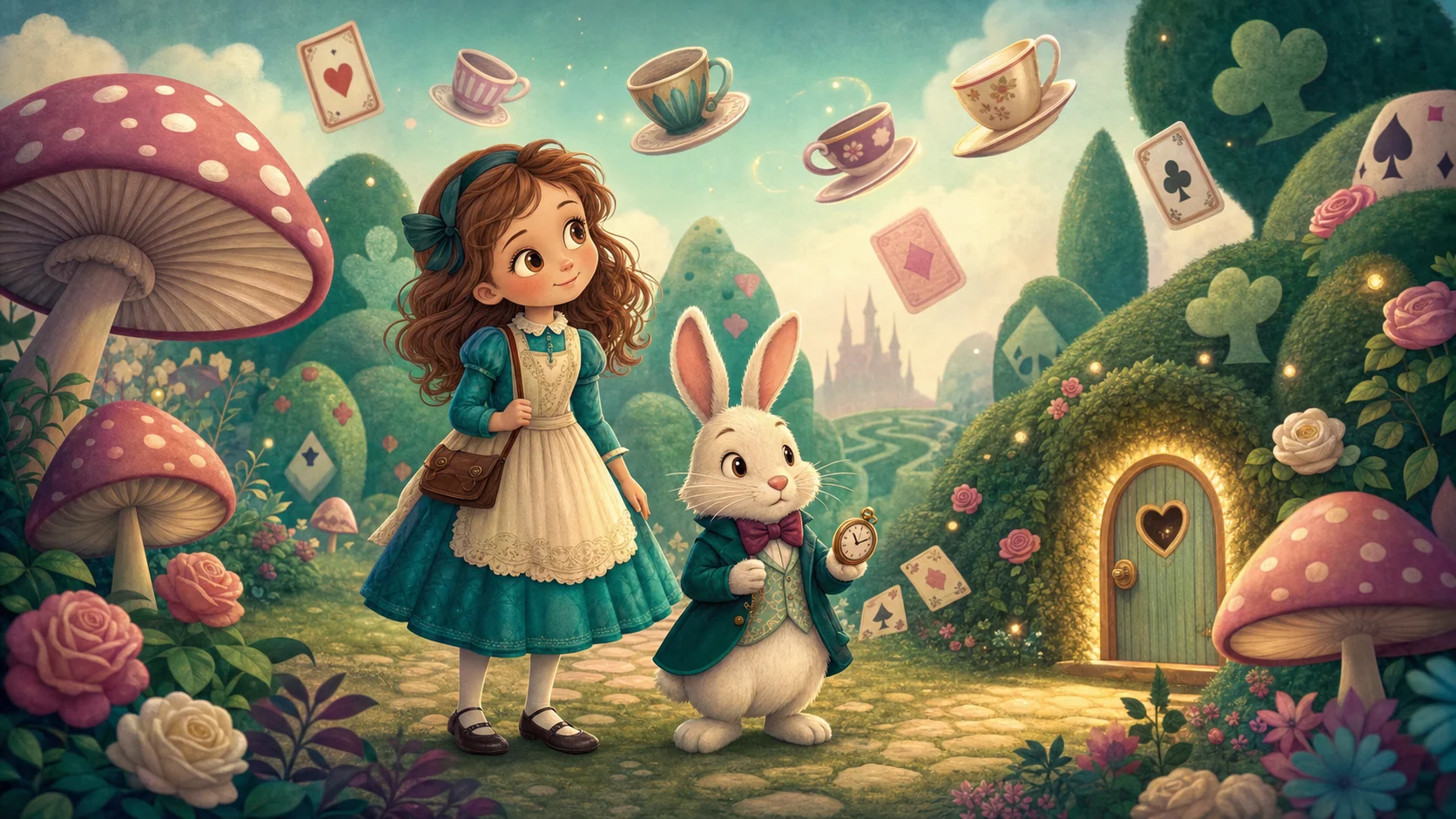
Children do more than watch Alice’s adventure. They read the cause behind each event, notice playful language and cultural context, then program, test and retell a recognisable part of the original story.
Short narration, character voices, gentle music and tappable story clues introduce the scene before any coding begins.
Children notice details from the classic — such as the White Rabbit speaking and checking a watch — and explain why Alice decides to follow.
A deliberately mixed-up block sequence gives children something real to fix, run and explain before the resolved story page appears.
The programming is not a worksheet beside the story. Each block changes what a character does, what happens next or whether the scene can continue.
In one connected journey, children read for meaning, discover how a classic plays with language and rules, then turn that understanding into a working interactive story.
Listen, tap clues and work out why Alice chooses to act.
Meet an 1865 children’s classic through age-appropriate language and context.
Arrange real blocks, press Go and debug the order when the story does not make sense.
Complete a replayable storybook chapter and explain the choices behind it.
The planned family view connects reading, classic discovery, programming and debugging. It does not reduce the journey to a completion percentage.
Planned season outcome: Alice’s First Wonderland Journey — a six-chapter interactive storybook the child can replay and retell.
Curriculum preview only: these are system examples, not claims about a real child. The adaptation uses the public-domain 1865 text as its source, with original child-friendly visuals and audio. Final release remains subject to rights, culture and classroom review.
Alice in Wonderland is in curriculum development. The first planned season covers Chapters I–IV of the 1865 novel across six connected chapters. Playable access and pricing are not yet announced.
Ask about this collection